Monday, December 18, 2017

Huawei Enjoy 7S is finally official

Huawei Enjoy 7S is finally official


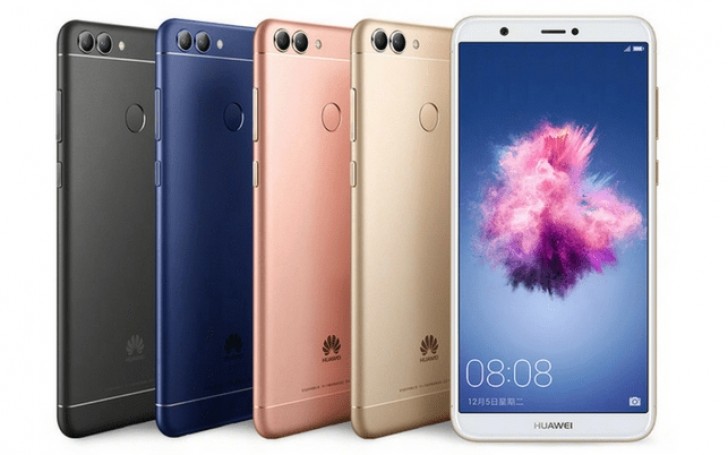
Last Monday the Huawei Enjoy 7S and just seven days later it makes its official debut. The midranger comes with Kirin 659 chipset, dual cameras and latest EMUI 8.0, based on Android Oreo. The Huawei Enjoy 7S has 5.65 FullView display with Full HD+ resolution of 2160 x 1080 pixels. The tall screen takes most of the front panel, sending the fingerprint scanner on the back. The SoC has octa-core CPU, clocked at 2.36 GHz and Mali-T830 MP2 GPU. There are two memory combinations 3 GB RAM + 32 GB storage and 4 GB RAM + 64 GB storage. The camera setup on the back is 13 MP + 2 MP, the secondary one assisting in artificial background blur for artsy portraits. The selfie snapper has an 8 MP sensor. There is a 3,000 mAh sealed battery that can be fast-charged thanks to the Super Charge tech. The Huawei Enjoy 7S comes in Black, Blue, Rose Gold and Gold/Champagne color for CNY1,499 ($226) for the 3/32GB variant and CNY1,699 ($256) for the more powerful 4/64 GB option. Pre-order is already live with the actual sales starting on December 22.


Red Xiaomi Mi A1 arrives in India

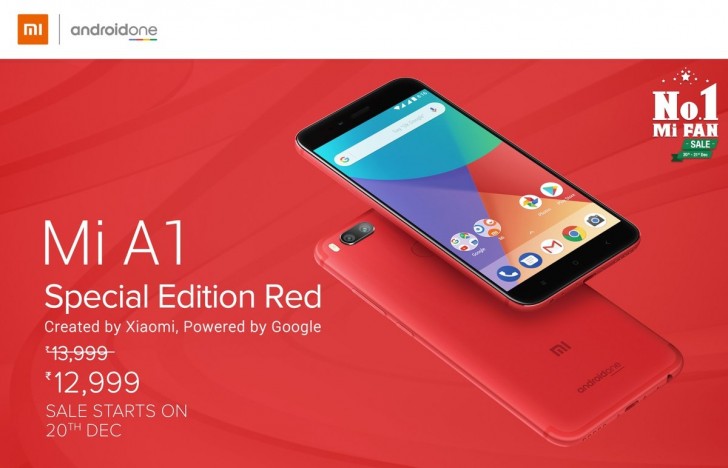
Red Xiaomi Mi A1 arrives in India


, the Xiaomi Mi 5X arrived in fresh new red paintjob. The global version of the phone, Xiaomi Mi A1, needed more than a month to follow suit and now it comes to India. The Red will cost INR12,999 ($202) and will arrive on December 20 at a Mi Fan Sale. The phone is discounted from its official price of INR13,999 that of about $15. Internally, the Mi A1 is the very same Snapdragon 625-powered phone with dual 12 MP cameras and Android One. It was launched with Android Nougat back in September, but Oreo Beta is already .


Xiaomi announces Oreo beta program for Mi Mix 2

Xiaomi announces Oreo beta program for Mi Mix 2


The was launched back in September this year with Android 7.1 Nougat on board. Those who have been waiting for the Oreo update to arrive will be glad to know that the company has just announced an Oreo beta program for the device. Keep in mind that it's a closed beta, which means that a very limited number of Mi Mix 2 users will be able to participate at this point and try the Oreo-based MIUI 9 build. There's currently no information on exactly when the final release will begin rolling, although that's probably still at least a few months away. For more information on the Mi Mix 2 Oreo beta (including how to register for it), head to the link below. |


Sunday, December 17, 2017

How do we get 3-4 day battery life & when?
How do we get 3-4 day battery life & when?


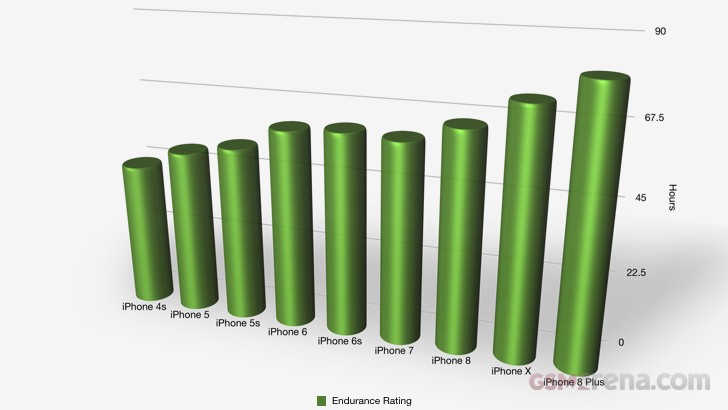
Its a quixotic demand we make of our smartphones we want the power of a super computer with the battery life of a Amazon Kindle in our pockets. Nothing promotes more debate and fills our comments section faster than the subject of battery life. No matter how much we wax lyrical about the latest hardware included in our devices the battery technology has hardly changed. Taking the last 6 years of iPhone models, using data from the results of our battery life tests, you can see that while battery life is being eeked out, its not the dramatic exponential growth that we would see if charted CPU performance for example. Its become the norm to accept that our devices will last 1-2 days at best, with some manufactures avoiding the subject altogether. During the September 12 iPhone announcements Phil Schiller never mentioned battery life for the iPhone 8 and iPhone 8 once, with the focus instead being on the long overdue wireless charging capabilities. Phil did only talk about battery life when announcing the iPhone X, stating that it had an extra 2 hours of battery life over the iPhone 8 which in truth is actually provided by the extra 895 mAh battery capacity. Lithium Ion batteries that can be dated back to the 1970s were commercialized in the early 90s and were still using them today. We need a battery revolution but dont hold your breath for that, it could take another 10 years for the next generation of batteries to be powering our devices. This article isnt about what will be powering the next generation of smartphones but whats likely to reduce the draw on the batteries that we have today. In no particular order of priority, the notable battery hogs, outside of rogue apps, are the display, the radios and the chipset, so we'll address those in order. It wasnt always the case, but weve almost reached a tipping point where AMOLED is more power efficient than LCD. Its a complex subject and even harder to measure as you have to take into account not only screen brightness but APL (Average Picture Level) which is based on whats actually being displayed. Ideally, at this juncture, we would provide a sexy graph or figure comparing LCD and AMOLED power consumption. The reality is that there are so many variables involved that this is nigh on impossible. To illustrate this, lets take the iPhone X and iPhone 8 Plus. Excluding the screen, these two have identical innards. Even the batteries are have a difference of a mere 25 mAh in favor of the iPhone X. However, in our battery tests for Web browsing and Video playback the iPhone 8 Plus bests the iPhone X by just over 3hrs and just under 3hrs respectively. That could be because the iPhone X has more pixels have to push or there might be some inefficiencies due to the layered battery introduced in the iPhone X. Or is it Face ID that's a battery hog? We feel we could go on but the point is clear. Micro Led or mLED was invented in 2000 and is perhaps one of the closest to trial production and commercialization. Micro LED is a display technology that is based on tiny micro LED devices utilized to form the color pixels. Sharing many traits with OLED they eliminate the need for back lighting and due to their smaller size allow for even higher resolutions that are also flexible in nature. What we're interested in though is power consumption and its been stated that a mLED display provides 2-3 times the brightness of an OLED display whilst consuming the same power. If these figures bear true in the real world then Micro LEDs could improve battery life twice! Now this is more like it. This is a game changer which is why in 2014 Apple acquired LuxVue, Foxconn Electronics announced that it plans to acquire eLux and its long rumored that Samsung will acquire PlayNitride, all micro LED start ups. As always, the challenge is taking this technology through to commercialization. Its highly probable that the focus will be on smaller display panels for wearable and VR hardware at first. Based on current estimates, the earliest we would expect to see products based on mLED panels would be 2019 with acceptable smart phone yields a couple of years after that. Due to be ratified in 2018, 5G is the fifth generation 5G wireless standard. One of the primary considerations when developing the 5G standard was a reduction in power consumption. This is achieved in part through the implementation of flexible sleep modes but additional considerations are also a factor. When your smart phone connects to a cell tower, it attempts to connect you to the nearest tower. However, if that tower has no spare capacity youre connected to a tower further away which results in a greater battery drain. More devices will be able to connect to 5G though. Both due to the frequencies used, but also in a desire to expand the network capacity, 5G will be enabled by utilizing small cells over shorter distances as opposed to a single large tower covering greater distances. The result is that you will be able far more often to a very local cell which will reduce battery drain. 5G also promises greater data rates. Qualcomm says 5G will be able to boost capacity by four times over current systems by leveraging wider bandwidths and advanced antenna technologies. Its been claimed that 5G should enable a 20% power saving. Current estimates are for the arrival of 5G sometime in 2019-2020. This increased data rate is also realized with the Bluetooth 5.0 standard which doubles the BLE data rate. The result of these boosted data rates from 5G and Bluetooth 5.0 is that the radios are powered for less time resulting in a battery saving. Slightly off topic but relevant nonetheless, wireless charging isnt new and its far more convenient than plugging your phone into a power source via a cable. Today we experience this magic over small distances though measured in millimeters and we still have to place our phones on a target charging pad. One of many start ups working on getting round this is Pi, who recently (Dec 17) received an $11.4M investment via their Series A round. Founded in 2015, Pi delivers wireless power by creating a weak magnetic field, made possible by their proprietary magnetic beam forming technology. Facilitating charging at a distance and in any orientation. Pi are currently planning to ship their first product sometime in 2018. Another approach is that taken by uBeam, theyre developing a solution that relies on ultrasound. The transmitter, which could look like a piece of art on your wall, converts energy and data into sound waves. Via an ultrasound transducer, the sound is converted into energy to charge your smart phone. One limitation of this technology is that its line of sight only and will cut out if an object gets in the way. This is no bad thing considering ultrasound is used to break up kidney stones. Whilst demonstrated this year, theyve provided no additional information on if/when this technology will be launched. It will be a while yet before a single standard emerges before its built into our phones. But once widely adopted it may well be that the issue of battery life is a moot point if your phone is being charged more often and conveniently at work, home and whilst you travel. With every new chip set announcement were delivered greater performance at a higher efficiency. Qualcomms recently unveiled Snapdragon 845 platform promises much and . So given this, why arent we seeing true multi-day battery life? In part, thats our fault. In addition to that battery having to power and push a greater amount of pixels around a larger screen for example, were using all the other amazing features that weve been provided with. Wed argue that manufactures have done well to keep battery life where it is today. It may not be long before we need to include a AR/VR specific test in our battery results to even better reflect what were using our smart phones for today. Over a relatively short period of time Apple has developed more of its silicone in house. Most recently the iPhone 8,8 Plus and X utilize an Apple design GPU and prior to that the W1 chip improved not only ease of use but battery life when using Bluetooth headphones. If recent rumors are to be believed Apple is well underway in designing its own Power Management Integrated Circuit (PMIC) for inclusion in future iPhones to extend battery life by several hours. Could this help them manage the dual layered battery better in the iPhone X and was this why our battery tests results were unexpected? While not exhaustive, this is a flavor of a number of the emerging technologies that are coming downstream to take away our battery blues while we wait for a revolution in battery technology. We started this feature with a battery chart from the last 6 years. If all the above comes to fruition, within the next 6 years we should see our smart phones have a 3-4 day battery life as standard, all whilst being charged as we go about our daily lives. 10 years out, with a revolution in battery technology we could well get the same endurance as we did with featurephones. We'd like to end with a plea to manufacturers. Please dont use all these battery efficiencies to reduce the size of the battery in our phones even further so you can give us a 3mm thick smart phones!

Saturday, December 16, 2017

Huawei and Xiaomi are trying to forge carrier partnerships and enter the US market

Huawei and Xiaomi are trying to forge carrier partnerships and enter the US market


Huawei Technologies Co. and Xiaomi Corp. the number one smartphone manufacturer in China and the up-and-coming value king of the local tech scene are allegedly in talks with US carriers to officially enter the overseas market. The information comes courtesy of industry insiders and is really sensitive and intentionally very low-key at the moment. Still, it was picked up by Bloomberg, so the credibility is certainly there. As far as particular details go, we know that the intention of both Chinese companies is to market flagship models through the potential new carrier channels, rather than value offers. Naturally, the the pair operate and position themselves differently in most markets, so any potential deals will likely vary quite a bit. Still, both manufacturers do have very competitive high-end devices in their current portfolios, especially when compared to more US-friendly, brand-name competition, like Apple or Samsung. 2017, in particular, saw flagship products pass a potentially crucial financial and psychological threshold namely the $1,000 retail mark. Plus, carrier phone subsidies have been dropping steadily in the US, so the iron is definitely hot and the scene set for some competitive market manoeuvres. That being said, however, expecting any major shift in US smartphone market conditions and especially end-user prices in not really plausible. The mature local market is not only extremely saturated at this point, but also run on a very tight shift and completely dominated by carriers. They carve up the users and iron out the offers. Realistically speaking, at this point in time, Xiaomi and Huawei can simply hope to expand their reach and try and tap the new market as best they can. This likely won't involve major price margins and gains for them, nor for consumers. Still, its not all bad news, as a good US market standing is definitely possible and beneficial for a Chinese company. ZTE, for instance, has been selling its dual-screen Axon model in the US, through an AT deal and the reported figures look promising. The two new potential players will likely have to and want to take slightly different expansion approaches. Xiaomi has been doing really well in India lately and is currently amid an ambitious European expansion. After dismissing the potential for selling through official carrier channels in the US for quite some time, Xiaomi has been . The whole endeavour will involve directing a lot of finances and manpower to another continent, which is no easy task for the still relatively small, comparatively speaking, company. As far as we know, however, Xiaomi has already started the tedious process of going over device specifications and certifications with carriers a arduous task that it expects will take up to two years. In the meantime, industry insiders claim it might try to make another interesting move and get some of its other smart smart products to brick and mortar stores in the States. Things like electric scooters and vacuum cleaners, as well as other smart appliances under the Miija brand. These could prove very competitive as well. Huawei might potentially be negotiating form a better standpoint. The company can arguably spare more resources and get through technical and legal processes faster. Also, it already has some standing on the US market. Not a carrier one, unfortunately, but it is already trying to sell some of its smartphones online with a fair level of success. An aggressive pricing strategy might just be part of the story, with devices like the Mate 9 going for around $400 on Amazon. Overall, it's hard to say how this development will pan out and whether negotiations will be successful at all. After all, we shouldn't underestimate the importance Apple places on its home turf, as well as the company's influence. A conflict of interest, seems like a loosing battle. Tell us your thoughts on the matter. Would you like to see Xiaomi and Huawei devices in AT and Verison's ads, offers and contracts? Do you thinks its a possibility to begin with?


Friday, December 15, 2017

GSMArena labs: enhanced compare tool

GSMArena labs: enhanced compare tool


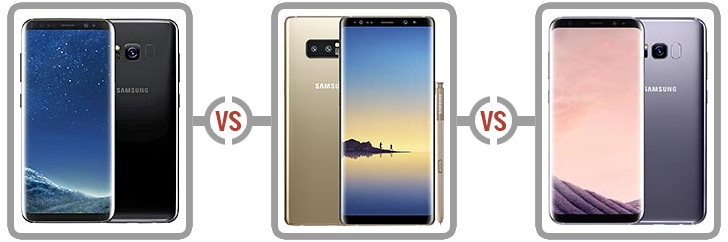
You dont realize how complicated modern smartphones are until you try comparing two side by side. The avalanche of features can bury the true differences between them so weve improved our Compare page with a new mode. It shows only the differences between models, dimming the identical features. Looking at very similar phones to find the differences can be quite hard lets try the Samsung Galaxy flagship line for example. With the differences mode enabled, you can immediately spot that the Galaxy Note8 has a stylus and HDR10-enabled screen. The camera has 2x zoom and uses a slightly different sensor compared to the Galaxy S8 1/2.55m vs. 1/2.5m (a minor detail but it proves Samsung reworked the main camera module). Click the link below to jump straight to that comparison weve made the new mode easy to share. And notice that it plays well with versions, which is especially helpful when checking LTE bands missing bands will stick out like a sore thumb. Lets try the new iPhone generation next. The iPhone X is built around a stainless steel frame, not aluminum like the iPhone 8 duo. And it uses a Super AMOLED screen with Dolby Vision/HDR10 support. The glass is not the usual ion-strengthened pane either. Finally, lets try some very different phones. They differ quite a bit, but you can still tell that the HTC U11+ has a microSD slot while the Pixel 2 XL does not. Both have use Gorilla Glass and aluminum, but the Pixels back is only partially covered in glass. Go ahead and try comparing your phone against others. Keep in mind that the differences mode is still in beta and may have a few rough edges. You can report any issues in the comments here and be sure well work to make it better. Now might be a good time to mention that we also added a chipset field to our tool recently. It should makes it easier for you to find a phone with the right balance of performance and power efficiency. Plus, chipsets are important for the custom ROM crowd as some are better-supported than others. Any feedback on that will be welcome too!


Samsung Galaxy A8 (2018), A8+ (2018), and LG K10 (2018) to be announced at CES in January

Samsung Galaxy A8 (2018), A8+ (2018), and LG K10 (2018) to be announced at CES in January


Samsung's much leaked and are going to be unveiled at CES, according to a new rumor out of South Korea. LG won't let Samsung have the whole spotlight to itself though, as it also plans to announce the K10 (2018) on the same occasion. The A8 duo for 2018 will come with 18:9 Infinity Displays and very small bezels. The A8+'s screen will be 6 in size, while the A8 will settle for 5.5. They will ship with Bixby Home and Bixby Remind, at least in Korea, but will not have Bixby Voice installed (or a Bixby button). You will get 4GB of RAM, 64GB of storage, a 16 MP main camera, a 16 MP + 8 MP dual selfie shooter, as well as a 3,500 mAh battery if you go for the bigger model. Both handsets will support Samsung Pay and will have a rear-mounted fingerprint sensor, a USB Type-C port, and a 3.5mm headset jack. Split-screen multitasking is in, of course, as well as 'Pop-Up View' that will let you see more than two apps at the same time. They will be out in Korea in mid-January, with other markets presumably getting them at around the same time or soon afterwards. LG will launch the successor to this year's , which is said to be thinner than that model and boast a 5.3-inch 1080p display, 3GB of RAM, 32GB of storage, a 13 MP main camera, and a 5 MP selfie snapper. A 3,000 mAh battery will keep the lights on. The new K10 will have an FM radio, and will be released in Korea at the end of next month. The and are most likely to be introduced after February, this report goes on to claim. Apparently, Sony aims to reveal its first bezel-less smartphone at MWC 2018, where Huawei might also present the P11 series.